Key Takeaways
- Commercial compactor services combine a hopper, a hydraulic ram, and a sealed container to reduce waste volume by about 4:1, cutting the number of weekly pickups your business needs.
- Stationary compactors handle dry waste like cardboard and packaging, self-contained compactors seal in wet waste from restaurants and grocers, and vertical compactors fit tight footprints with limited yard space.
- Frequent pickups, rising hauling bills, aging equipment, and OSHA or ANSI compliance gaps are the clearest signals that a dumpster program has outgrown its usefulness.
- Upgrading to a compactor lowers hauling frequency, improves sanitation and site safety, and supports landfill diversion goals tracked by property managers and corporate sustainability teams.
- Fusion Waste & Recycling designs a personalized, step-by-step compactor plan for each DFW business rather than handing over a one-size-fits-all unit.
Commercial compactor services turn a waste stream that once required daily attention into a system that runs on its own schedule. For DFW businesses generating steady volumes of trash, whether a restaurant or a warehouse, a compactor can replace overflowing dumpsters with one contained, secure unit that needs service only when it’s full. This guide breaks down how commercial compactor services work and the different equipment options available. It also covers the signs that tell a business it’s time to move beyond a standard dumpster program.
What a Commercial Compactor Service Actually Does
A commercial compactor service pairs equipment with a hauling schedule based on volume, not just time. Employees load loose trash into a hopper. A hydraulic ram then presses it into a sealed container, and the compacted load takes up a fraction of the space it did before. Equipment specialists point to a compaction ratio near 4:1, meaning four dumpsters of loose trash can shrink down to fit inside one container built for a compactor. That single number explains why so many DFW businesses eventually move away from a standard container program.
For a business generating a steady, high volume of trash, that ratio changes how waste gets handled day to day. Fewer container changes mean less truck traffic near loading docks and fewer chances for overflow. Total hauling costs tend to drop too, even though a compactor typically carries a higher upfront cost than a dumpster.
The Hopper, Ram and Container System
Every compactor, regardless of size or brand, relies on the same basic setup: a hopper for loading and a ram that applies pressure. A sealed container holds the compacted material until pickup. Most units include an indicator light that signals when the container reaches around 80% capacity, so property managers know exactly when to request service instead of guessing. Locking mechanisms and sealed doors also cut down on illegal dumping and pest access, two problems that plague open-top dumpsters sitting behind a building overnight.
How Compaction Changes Your Pickup Schedule
A dumpster gets picked up on a calendar, whether it’s full or not. A compactor gets picked up based on volume, which means the schedule flexes with your business. A restaurant during a slow month might go two weeks between compactor pickups, skipping the fixed weekly dumpster swap it doesn’t need. During a busy season, the indicator light flags a pickup request days before the container would have overflowed under the old system. That flexibility is one reason compactor customers can build a schedule around actual output rather than a generic route day.
Compactor Service Compared to Dumpster Service
Dumpsters and compactors solve the same basic problem, but they part ways once volume climbs past a certain point.
When a Dumpster Still Makes Sense
A small office or retail storefront with modest daily waste often does fine with a front-load dumpster in the 2- to 8-cubic-yard range. Restaurants with lower volume often fit the same profile. The container gets swapped on a set schedule, and the footprint stays small. This setup requires no ram or hydraulic system maintenance. For many businesses across North Texas, this remains the right fit for years.
When Waste Volume Outgrows a Dumpster
Growth changes the math. A property that once filled one 8-yard dumpster a week might now need three pickups just to keep the lot clear. At that point, a compactor starts to look less like an upgrade and more like a cost-control measure, since the equipment absorbs the extra volume rather than requiring extra trucks on site.
The Main Types of Commercial Compactors
Not every compactor fits every waste stream, and choosing the wrong one can create new problems instead of solving existing ones.
Stationary Compactors for Dry Waste
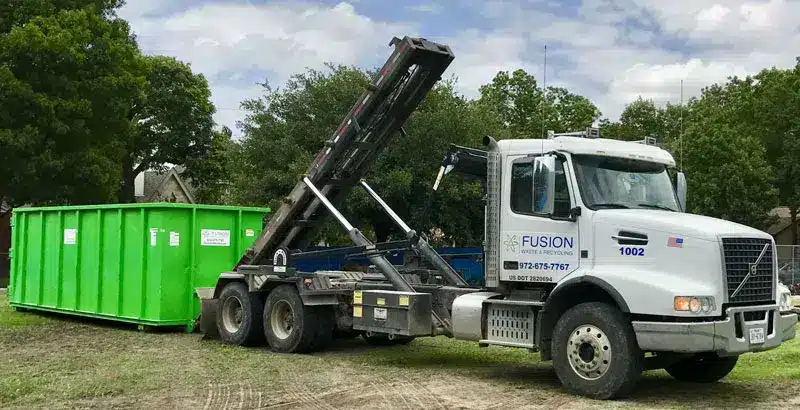
Stationary compactors bolt to the ground and connect to a detachable roll-off container, often in the 20- to 40-cubic-yard range once it fills with compacted material. Because the compactor itself never leaves the site, only the container gets hauled away and swapped, so the compaction cycle continues without interruption. These units work best for dry waste streams such as cardboard and packaging.
Self-Contained Compactors for Wet Waste
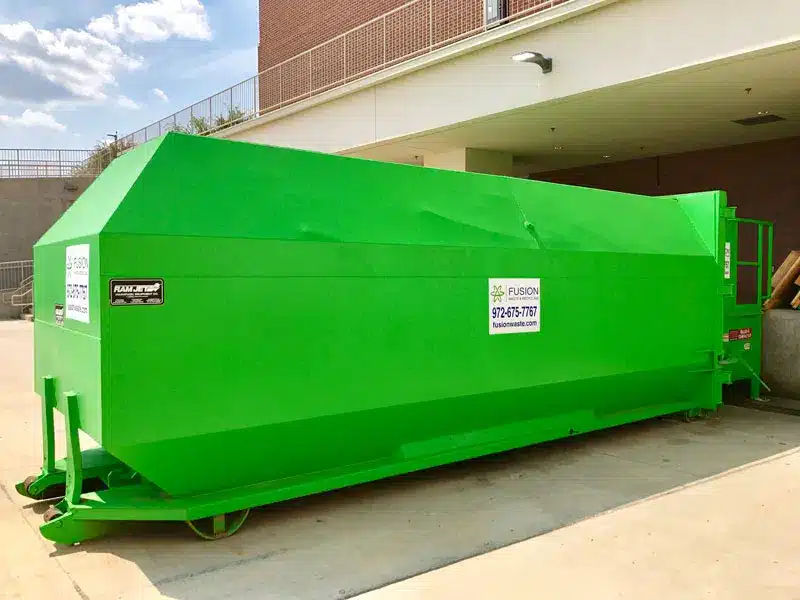
Wet waste behaves differently once it gets compacted; liquid separates from solids and needs somewhere to go. Self-contained compactors solve this by sealing the compaction chamber and the storage container into one leak-proof unit, often with a drainable sump built in. Restaurants, grocery stores, hospitals, and food processing facilities rely on this style because the entire unit travels to disposal and returns empty, rather than leaving a liquid residue behind on-site.
Vertical Compactors for Tight Footprints
A vertical compactor presses waste from the top down and pairs with a smaller container, often 6- or 8-cubic-yards, making it a fit for retail stores and pharmacies with limited space for equipment. Any property working with a tight footprint benefits from the same design. It handles dry to moderately wet material and is serviced by a standard front-load truck, so it doesn't require the specialized roll-off equipment a stationary unit needs.
Signs Your Business Is Ready for an Upgrade
Most businesses don’t wake up one day and decide to buy a compactor. The decision usually builds slowly, through a pattern that becomes hard to ignore.
Your Hauler Shows Up More Than a Few Times a Week
If your current schedule already calls for pickups more than two or three times a week just to keep containers from overflowing, that frequency alone tells you a dumpster program has hit its ceiling. Fusion Waste & Recycling often finds that a waste audit uncovers this exact pattern before the client even realizes how often trucks are visiting the property.
Repairs Keep Piling Up on an Aging Unit
An older compactor that already exists on-site sends its own warning signs. Grinding noises, slow ram cycles, hydraulic fluid leaks, and jammed doors point to internal wear that typically worsens with more use. Once replacement parts for a specific model become hard to source, repair costs can climb past what a new unit would cost over the same period.
Your Waste Stream Has Changed
A business that shifts from mostly dry packaging to a mix that includes food waste, or one that adds a kitchen or deli counter, may find its existing equipment no longer matches its output. A stationary compactor built for cardboard won’t handle wet waste safely, so operational changes often require equipment changes in type and size.
Safety or Compliance Concerns Are Surfacing
Federal safety rules apply directly to compactor equipment. The Occupational Safety and Health Administration (OSHA) requires lockout and tagout procedures under 29 CFR 1910.147 before anyone services or cleans a compactor, and the same rule applies before clearing a jam inside the unit.
Machine guarding requirements under 29 CFR 1910.212 call for interlocks that stop the ram whenever an access door opens. The American National Standards Institute (ANSI) also publishes an equipment standard, ANSI Z245.2, that many auditors reference alongside OSHA rules. A unit that fails to meet these expectations puts workers at risk and exposes a business to citations, so an equipment gap here should move to the top of the upgrade list.
What Businesses Gain From Upgrading
The advantages of upgrading show up quickly once a compactor replaces a dumpster program, particularly at DFW properties generating consistent trash volume.
Lower Hauling Costs and Fewer Trips
Compaction shrinks four containers of loose trash into roughly the space of one, which directly reduces how many times a truck needs to visit a property each month. Fewer trips mean lower hauling fees over time, even after accounting for the added upfront cost of compactor equipment.
A Cleaner, Safer Site
A sealed, locked container keeps pests and unauthorized dumping away from a loading dock, and compacted material carries a lower fire risk than loose trash piled in an open top. Employees also spend less time managing overflow, which frees up labor for other tasks around the property.
Progress Toward Landfill Diversion Goals
Property managers and corporate sustainability teams increasingly track landfill diversion as a measurable, ongoing target. Pairing a compactor with a parallel recycling stream for cardboard and plastics gives a business a clearer picture of how much material reaches the landfill versus how much gets diverted. Organic waste and food scraps can run through a separate composting stream for an even fuller picture.
Choosing and Installing the Right Compactor With Fusion Waste & Recycling
Selecting a compactor isn't a decision you make from a spec sheet alone. Fusion Waste & Recycling treats every DFW property as a distinct waste stream rather than pushing a standard unit. Property volume and available space set the starting point, and the mix of wet and dry material narrows the choice from there.
A Waste Audit Before Any Equipment Recommendation
Fusion Waste & Recycling, an independent, Minority Business Enterprise (MBE) waste and recycling provider based in the Dallas-Fort Worth (DFW) Metroplex, starts every compactor conversation with a site visit rather than a sales pitch. As New Age Thinkers in environmental services, the team walks the property and reviews current pickup frequency.
From there, the mix of dry and wet material on-site shapes which type of compactor makes the most sense for the property. That step-by-step approach reflects more than 35 years of combined industry experience managing waste and recycling programs for businesses and school districts across North Texas, as well as multi-family housing communities.
Installation, Training and Ongoing Account Support
Once a compactor is selected, Fusion Waste coordinates installation and trains on-site staff on safe loading and operation. Ongoing account management continues after that, rather than the relationship ending at delivery. That includes signage and education support so employees know what belongs in the compactor and what should go into a parallel recycling stream for cardboard and e-waste.
Organic material can run through its own collection stream as well. The goal, consistent with the company's broader approach to environmental services, is a program built around a specific property's needs rather than a standard package pulled off a shelf.
Frequently Asked Questions
A dumpster stores loose trash and gets emptied on a fixed schedule. A compactor uses a hydraulic ram to press waste down before storage, which reduces volume by roughly 4:1 and lets pickups follow actual output rather than a set calendar.
A waste audit is the most reliable way to answer this. As a general signal, needing more than two or three dumpster pickups a week, or regularly dealing with overflow, points toward a compactor being worth the switch.
Not effectively. Stationary compactors are built for dry material like cardboard and packaging, while self-contained units seal in wet waste from kitchens and delis. Grocery departments generating food waste fit the same category. Mixing wet waste into a stationary unit not designed for it creates leaks and odor problems.
Staff need training on safe loading procedures and lockout and tagout steps required before servicing or clearing a jam. They also need to know where the emergency stop controls are located. OSHA standards under 29 CFR 1910.147 and 1910.212 apply directly to this equipment, so training should be documented and repeated for new employees.
Yes, when it’s paired with a separate recycling stream. A compactor handles the trash side of the equation, but cardboard, plastics, glass, scrap metal, and organics still need their own collection to count toward landfill diversion targets.
The process starts with a waste audit and site walkthrough to review waste type and volume. Available space on the property factors into the recommendation too, followed by full installation and training support rather than a generic equipment drop-off.
References
- Fairfax, Richard E. “Interlock requirements for access door(s) of trash compactor.” OSHA, January 18, 2006. September 2026. https://www.osha.gov/laws-regs/standardinterpretations/2006-01-18-0
- OSHA. “Lockout/Tagout: Control of Hazardous Energy.” OSHA, 2002. September 2026. https://www.osha.gov/sites/default/files/publications/OSHA3120.pdf