Key Takeaways
- A commercial waste audit reviews what your facility discards, recycles, and can divert by combining records analysis, facility walk-throughs, and hands-on sorting to establish a trustworthy baseline.
- Studies indicate up to 77% of what businesses toss is not true trash, so many companies are overpaying for disposal while missing out on recycling and recovery value.
- Right-sizing containers and adjusting pickup schedules based on audit data can trim disposal costs by 15% to 30%. Cardboard alone represents about 30% of commercial waste. Focusing first on cardboard, plastics, metals, food waste, and e-waste delivers quick gains.
- The current U.S. recycling and composting rate is roughly 32.1%, while the Environmental Protection Agency estimates 75% of the waste stream is recyclable. This leaves significant room for improvement.
- A well-run audit supports landfill diversion, Leadership in Energy and Environmental Design (LEED) and Total Resource Use and Efficiency (TRUE) Zero Waste certifications, environmental, social, and governance (ESG) reporting, and compliance with Texas regulations.
- Fusion Waste & Recycling brings Minority Business Enterprise (MBE)-certified, Dallas-Fort Worth (DFW) local expertise with data-driven waste and recycling solutions for businesses, school districts, and multi-family communities.
- After the audit, focused training, clear signage, and continuous tracking are necessary to lift your recycling rate and keep progress moving.
A commercial waste audit takes a clear, methodical look at everything your company throws away and recycles, showing exactly what’s in your bins and where it should go. Why does it matter? The U.S. generates about 292 million tons of municipal solid waste each year, yet only 32.1% gets recycled or composted, even though the EPA estimates roughly 75% of our waste stream is recyclable/ compostable. With global waste projected to reach 3.4 billion tons by 2050, businesses have a timely chance to lead locally and capture value that’s currently being landfilled.
Across the DFW Metroplex, a waste audit gives organizations from multi-family housing communities and school districts to corporate campuses the first, most practical step to maximize landfill diversion and uncover real savings. Studies show up to 77% of what businesses toss isn’t actually trash, and right-sizing services with audit data can trim disposal costs by 15% to 30%. A strong audit pinpoints recoverable commodities like cardboard, plastics, glass, scrap metal, e-waste, wood, organics/food waste, Styrofoam, and yard waste, then matches them with the most efficient collection and processing options. The result is clarity that drives higher recycling rates, fewer overages, and contracts aligned with your true material profile.
As your MBE-certified North Texas partner, Fusion Waste & Recycling brings 35+ years of combined experience and a track record managing over 10 million pounds of material to deliver data-driven waste and recycling solutions. We’re New Age Thinkers with a friendly, step-by-step approach that personalizes each commercial waste audit and implementation plan to your site, staff, and sustainability goals. Ready to get started? In this guide, we’ll show you how to conduct a waste audit and improve your company’s recycling rate so you can boost recovery, cut costs, and lead by example in the DFW community.
What is a Commercial Waste Audit?
A commercial waste audit is a structured review of a facility’s waste stream that shows what’s being thrown away, what’s being recycled, and which materials could be diverted from the landfill. It gives your business a credible, numbers-backed view of the types, volumes, and sources of waste across departments or locations. That baseline becomes the starting point for targeted improvements, cost control, and stronger sustainability performance.
The Environmental Protection Agency outlines three complementary ways to audit: a records examination, a facility walk-through, and a physical waste sort. Records show trends in tonnage and spending; walk-throughs reveal container placement, signage, and contamination; and sorts show exactly what’s in your bags and bins. Used together, these methods create a complete, objective picture of your current practices.
One of the largest commercial waste characterizations ever conducted found that 77% of what businesses discard isn’t actually trash. In practical terms, most companies pay more than needed for disposal while recyclable and recoverable materials leave as waste. A commercial waste audit makes those gaps visible so you can increase landfill diversion, reduce expenses, and support ESG and certification goals.
Why Your Dallas-Fort Worth Business Needs a Waste Audit
The average American generates about 4.9 pounds of municipal solid waste per day, adding up to more than 292,000,000 tons each year. While the Environmental Protection Agency estimates that about 75% of the waste stream is recyclable or compostable, the national recycling and composting rate sits near 32.1%. That gap is both a sustainability challenge and a business opportunity, especially in North Texas where fast-growing operations and school districts face rising volumes and evolving recycling markets.
Think about your own workplace. The typical office worker produces roughly 2 pounds of paper waste per day, and cardboard can make up about 30% of commercial waste by volume. In many facilities, recyclables such as plastics, glass, and metals end up in trash because of poor bin placement, unclear signage, or outdated service schedules. A commercial waste audit pinpoints where, when, and why that happens so you can act precisely.
Many businesses save 15% to 30% on disposal costs by right-sizing containers and adjusting pickup frequency based on audit data. One retail client cut its monthly waste bill by 22% simply by aligning service frequency with actual generation. Combine those savings with higher landfill diversion, and the audit often pays for itself quickly.
In the Dallas-Fort Worth Metroplex, audits also support compliance and documentation. The Texas Commission on Environmental Quality’s municipal solid waste rules expect businesses to understand and manage their waste responsibly, and many organizations rely on documented audits to show due diligence. If you’re pursuing Leadership in Energy and Environmental Design (LEED) or Total Resource Use and Efficiency (TRUE) Zero Waste certification, a commercial waste audit is a common step for establishing your baseline, tracking diversion rates, and verifying progress.
At Fusion Waste & Recycling, we view audits as the engine for smarter waste and recycling programs across industries. From multi-family housing communities balancing resident education with capacity limits, to school districts coordinating campus-wide recycling and confidential business document shredding, to large commercial campuses integrating e-waste and organic programs, better data helps you design systems that work. As New Age Thinkers focused on practical innovation, we bring an MBE-certified North Texas perspective to your sustainability goals.
Step-by-Step Guide to Conducting a Waste Audit
A commercial waste audit doesn’t have to be complicated. With a clear roadmap and teamwork across departments, your organization can collect accurate data in days and start improving landfill diversion in weeks. Here is the high-level process, followed by deeper guidance for each step.
- Define goals and assemble a team from multiple departments to set scope, objectives, and success metrics.
- Review existing waste and recycling records to understand volumes, costs, and service patterns.
- Conduct a facility walk-through to observe container placement, signage, contamination, and workflows.
- Perform a physical waste sort to quantify materials by category and identify contamination sources.
- Analyze results and develop a prioritized action plan with timelines, responsibilities, and metrics.
Step 1: Define Goals and Assemble Your Team
Start by defining what success looks like for your business. Do you want to raise your recycling rate by 15% this year, reduce disposal costs by 20%, qualify for LEED points, or launch an organics diversion pilot at one facility? Translate those ambitions into SMART (specific, measurable, achievable, relevant, time-bound) objectives so your audit stays aimed at outcomes, not just data collection.
Build a team that includes facilities or operations leaders, sustainability champions, procurement, custodial or janitorial supervisors, and representatives from key departments. Aim for a group of at least five people so you capture varied perspectives on where waste starts and how it moves through your space. Assign a project lead, set a realistic audit schedule, and define roles for data collection, communications, and safety oversight.
Step 2: Review Existing Waste Records
Before anyone opens a bag, study your numbers. Gather 12 months of hauling invoices, disposal receipts, and recycling reports. Create a simple spreadsheet to track monthly volumes and costs by stream: trash, single-stream recycling, cardboard, organics, scrap metal, and specialty items such as e-waste. Note seasonality, vendor surcharges, contamination fees, and any missed pickups or overflows.
Reviewing your hauler contracts and service levels is just as important. Document container sizes and counts, pickup frequencies, compactors versus front-loads, and any tonnage thresholds that trigger price changes. If you manage multiple facilities in the DFW Metroplex, compare performance across sites to spot outliers. This records examination grounds your audit in reality, revealing opportunities you can confirm during walk-throughs and sorts.
Step 3: Conduct a Facility Walk-Through
Take a systematic tour of your facility with a clipboard and camera. Map the location of every bin, dumpster, compactor, and dock staging area, and note container sizes and fill levels at different times of day. Pay close attention to break rooms, copy and print areas, restrooms, loading docks, maintenance shops, kitchens, cafeterias, and high-traffic corridors where improper disposal behaviors tend to cluster.
As you walk, check what is inside containers. Are recyclables mixed into trash? Are liquids contaminating paper? Is cardboard being flattened and bundled, or tossed intact? Talk with staff and custodial teams to learn how collection actually works on the ground. Look for bottlenecks, such as too few recycling bins near generation points, unclear signage, or doors and layouts that make proper containers inconvenient to reach.
Step 4: Perform the Physical Waste Sort
The physical sort is where the data becomes concrete. Set up a safe sorting area with proper personal protective equipment: heavy-duty gloves, safety glasses, coveralls or aprons, and closed-toe shoes. Stage clean, labeled totes or bins for major categories such as cardboard, mixed paper, plastics by resin where practical, glass, metals, food waste and other organics, e-waste, wood, Styrofoam, and residuals. Photograph the process and results to build a visual record.
Collect representative samples from different areas such as office floors, cafeterias, production lines, and exterior receptacles, as well as during different times of day, to avoid bias. Weigh each category and record the data, noting contamination issues such as food-soiled paper or plastic film in the wrong stream. If time allows, conduct secondary sorts on high-volume categories to pinpoint contamination sources and quantify them, which will inform targeted training and signage later.
Step 5: Analyze Data and Develop an Action Plan
Combine your records, observations, and sort data to calculate your current diversion rate, which is the weight of recyclables and organics divided by total waste generated, expressed as a percentage. Next, identify low-hanging fruit: high-volume materials that are easy to capture, containers that are consistently underfilled or overflowing, and locations with persistent contamination. Prioritize solutions using the zero-waste hierarchy: rethink and redesign first, then reduce, reuse, recycle or compost, and leave disposal as the last resort.
Build a clear action plan with owners, deadlines, and key performance indicators (KPIs). Common actions include right-sizing dumpsters and adjusting pickup frequencies, rolling out centralized collection points, updating signage, launching employee training, and piloting specialty streams such as confidential business document shredding or electronic waste disposal. Set quarterly milestones and schedule a follow-up audit to measure progress, validate savings, and expand what works.
How to Improve Your Company's Recycling Rate Post-Audit
The audit gives you the map; now it is time to drive. The most effective improvements combine infrastructure changes, employee engagement, and focused material strategies. Start with right-sizing and scheduling, remove friction with better signage and training, and target high-volume recyclables that deliver immediate boosts to your diversion rate and your bottom line. Keep tracking, keep communicating, and build momentum with quick wins that scale across locations.
Right-Size Your Dumpsters and Collection Schedule
Many DFW businesses discover that containers are either too big, too small, or serviced too often. If your front-load dumpsters show consistently low fill levels on pickup days, you’re likely paying for air; if they routinely overflow, you risk contamination, litter, and fees. Use your audit data to match container capacity and service frequency to actual generation by day and week, then reassess seasonally.
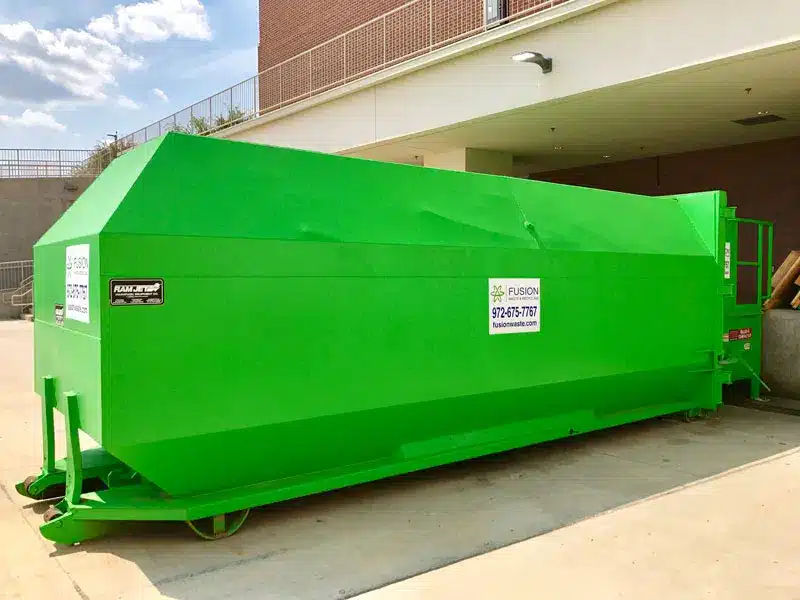
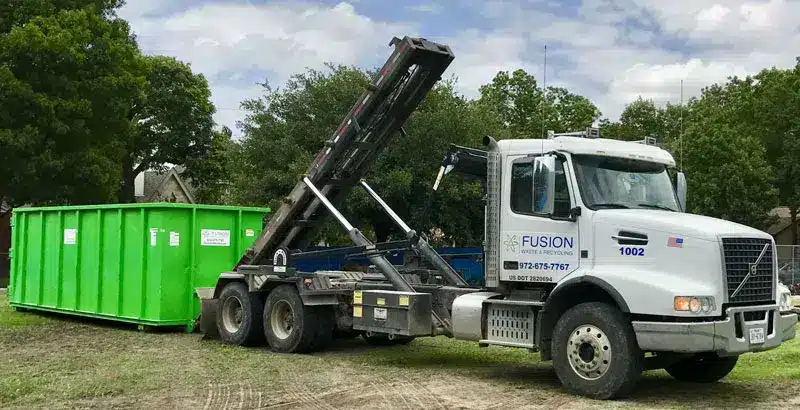
Fusion Waste & Recycling offers front-load service in 2-, 3-, 4-, 6-, and 8-yard containers and roll-off options in 20-, 30-, and 40-yard sizes, giving you the flexibility to right-size across office, retail, warehouse, and multi-family settings. When you optimize service, you also lower contamination, improve cleanliness, and make recycling more convenient.
Right-sizing isn’t a one-time step. Revisit your service plan as operations evolve through new product lines, seasonal peaks, or growth in headcount. For school districts and multi-family housing communities, consider differing weekday versus weekend generation and design schedules accordingly. Our team can help set up a simple dashboard to track fill rates, contamination incidents, and tonnage so you maintain the right balance over time.
Implement Employee Training and Clear Signage
Infrastructure only works when people know how to use it. After your audit, refresh your signage with clear icons, color cues, and specific examples of what belongs in each stream and what doesn’t. Place signs at eye level on containers and above them on walls, and put matching labels on internal bins so employees can follow the system from desk to dock without confusion.
Host short, recurring training for employees and custodial staff, and include waste sorting in onboarding procedures. Share key findings from the audit to make the case for change: the current diversion rate, the top contaminants, and the cost and environmental benefits of improving. Centralized collection points, where employees walk to a nearby station with clearly labeled streams, are shown to increase recycling participation and reduce desk-side trash that hides contamination.
Keep engagement positive and practical. Provide quick-reference guides, run green team challenges, and celebrate milestones such as reaching a 50% diversion rate or diverting the first thousand pounds of organics. In multi-tenant and multi-family settings, tailor communications to each audience and use multilingual signage where needed. Consistency builds new habits that drive measurable results.
Target High-Volume Recyclables
Your audit will show which materials dominate your waste stream; focus early efforts there. Cardboard is often the biggest opportunity, especially in retail, e-commerce, and warehousing. Set up back-of-house breakdown stations, keep cardboard dry, and bale or stage it for recycling to capture value and free space. In office environments, mixed paper and confidential documents often account for large volumes; a scheduled confidential business document shredding program both protects information and increases paper recovery.
Plastics, glass, and metals are next-tier priorities. Plastic film and wrap require special handling but can often be bundled for recycling; rigid plastics, bottles, and containers belong in clearly marked recycling streams. Aluminum is a high-value opportunity: Americans landfill tens of billions of cans annually, representing hundreds of millions of dollars in lost scrap value. For food service, cafeterias, or hospitality, food waste and organics programs can markedly lift diversion while improving cleanliness and odor control.
Don’t overlook specialty streams, either. Electronic waste disposal protects your data and the environment while meeting IT asset disposition policies. Scrap metal from maintenance operations, wood from shipping, Styrofoam from packaging, and yard waste from groundskeeping can all be diverted with the right collection and vendor partnerships. Fusion designs these programs for businesses, school districts, and multi-family housing communities so each material has a clear path from generation to recovery.
Partner with Fusion Waste & Recycling for Your Next Audit
Fusion Waste & Recycling is an independent, MBE-certified leader serving the Dallas-Fort Worth Metroplex with over a decade in business and more than 35 years of combined industry experience. We’ve helped organizations across North Texas manage and divert over 10,000,000 pounds of material through practical, data-driven waste and recycling solutions. When you partner with us on a commercial waste audit, you get local expertise, national best practices, and a personalized, step-by-step approach from New Age Thinkers who care about your results.
Our audit services blend the Environmental Protection Agency’s three methods (records examination, facility walk-throughs, and physical waste sorts) to build a complete picture of your operations. We quantify your current diversion rate, call out fast wins, and deliver a prioritized action plan with realistic savings scenarios. Then we implement, with right-sized front-load and roll-off services, improved signage, staff training, and specialty programs such as confidential business document shredding and electronic waste disposal.
We work across industries and property types, from school districts and universities to multi-family housing communities, logistics hubs, and corporate campuses. Whether you need a baseline commercial waste audit for a single location or a multi-site rollout that supports LEED, TRUE, and ESG reporting, we will align your service plan to Texas Commission on Environmental Quality (TCEQ) requirements and your internal goals. Our team monitors progress, provides clear reporting, and adapts your program as your needs evolve, keeping landfill diversion and cost control at the center of every recommendation.
Frequently Asked Questions (FAQs)
For most facilities, a basic commercial waste audit can be completed in one to three days, depending on size, operating hours, and the number of material streams. The timeline includes records review, a facility walk-through, and at least one physical sorting session. Complex, multi-building campuses may take a week or more to gather representative samples. We’ll scope your project up front so you know exactly what to expect.
At minimum, conduct an audit annually to validate your diversion rate, service levels, and costs. If you’re actively improving programs or experiencing operational changes, semiannual reviews help sustain momentum and catch new issues early. Some organizations, such as certain manufacturers or schools, add targeted quarterly spot checks for critical areas. The key is to match frequency to your pace of change and data needs.
A solid benchmark for many businesses is a diversion rate of 50% or higher, with steady improvement over time. Federal agencies are targeting 75% by 2030, and certifications such as LEED and TRUE require documented performance and progress. Your ideal target depends on industry, space constraints, and material mix, but audits help set a realistic trajectory. We’ll help you establish milestones that stretch your goals without disrupting operations.
Smaller facilities can often run an effective DIY audit to establish a baseline, provided safety protocols and documentation are followed. If you’re pursuing certifications, responding to an RFP, planning a construction or campus expansion, or need benchmarking and regulatory guidance, a professional partner adds speed and structure. Fusion brings standardized methods, PPE, data tools, and DFW-specific market knowledge. Many clients choose a hybrid approach, with our team leading the first audit and training staff to handle follow-ups.
Cardboard and mixed paper are common misses, even in offices that believe they’re covered. Plastics, glass, and metals often end up in trash due to poor bin placement or unclear labels, and aluminum cans represent high-value recovery. Specialty streams such as e-waste, Styrofoam, scrap wood, and yard waste are frequently overlooked, as are confidential documents that could move to scheduled shredding and recycling. Your audit quantifies these gaps so you can focus on the biggest wins first.
We design audits to be minimally disruptive by working around peak hours and coordinating with facilities and custodial teams. Walk-throughs are observational, and physical sorts can be staged in back-of-house areas with safety protocols. Most staff engagement involves brief interviews and quick training sessions. We will communicate clearly so everyone understands the plan and the benefits.
Audit data exposes mismatches between your service levels and actual generation, allowing you to right-size containers and reduce pickup frequency where appropriate. Many companies see 15% to 30% reductions in disposal costs, and some achieve immediate savings by consolidating services and eliminating contamination fees. Targeted recycling programs can generate rebates for commodities such as cardboard and metals. The net effect is less waste going to landfill and a service plan that fits your budget.
Yes, because an audit verifies how well your current system performs and reveals hidden opportunities. Even mature programs often find contamination hotspots, underused streams, or containers that are the wrong size or in the wrong place. Audits also provide defensible data for ESG reporting and certifications. Continuous improvement starts with checking the facts, not assumptions.
Yes. Fusion Waste & Recycling provides full-service commercial waste audits across the Dallas-Fort Worth Metroplex for businesses, school districts, and multi-family housing communities. We pair data-driven analysis with flexible service options, including 2-, 3-, 4-, 6-, and 8-yard front-load dumpsters and 20-, 30-, and 40-yard roll-off containers. Our MBE-certified North Texas team will build a personalized plan to boost your landfill diversion and reduce costs.
References
- U.S. Environmental Protection Agency — National Overview: Facts and Figures on Materials, Wastes and Recycling
- U.S. Environmental Protection Agency — Instructions on Conducting Waste Assessments
- U.S. Environmental Protection Agency — Waste Diversion at EPA
- Dumpsters.com — A 5-Step Guide to Conducting a Waste Audit
- Frontier Waste — Waste Audit: Step-by-Step Guide for Businesses
- RTS — A Practical Step-by-Step Guide to Conducting a Waste Audit
- Great Forest — How to Plan and Conduct a Commercial Waste Audit: A Step-by-Step Guide
- Waste Harmonics — Waste Audit 101: What You Need to Know
- CheckSammy — Waste Audits: Finding Missed Diversion Opportunities
- FV Recycling — Surprising Statistics About The Waste That Businesses Produce