Key Takeaways
- Multifamily properties have far less access to recycling than single-family homes, so diversion gains often start with basic infrastructure improvements, not just changes in resident behavior.
- Requesting a waste audit is often the fastest way to find out what is actually going into your dumpsters and why contamination may be happening.
- Container size, placement, and signage matter as much as what materials are technically accepted into waste streams.
- Organics, e-waste, and confidential shredding are diversion opportunities most multi-family communities have not yet considered.
- Resident and staff education should be ongoing, not merely a one-time move-in packet, to keep participation and waste diversion rates high.
- A personalized, step-by-step waste and recycling plan outperforms a one-size-fits-all standard service every time.
Multi-family properties handle waste differently than single-family neighborhoods, and that difference shows up directly in how much material ends up in a landfill instead of a recycling stream. Shared dumpsters, resident turnover, and inconsistent staffing are all factors that work against the kind of steady recycling habits curbside programs count on. The good news is that landfill diversion is highly fixable once a property understands where the gaps are actually coming from and makes adjustments accordingly. In this guide, we’ll walk you through the practical steps DFW multi-family communities can use—from waste audits to container sizing, signage, organics, and resident engagement—to build a program that fits your property’s needs and holds up over time.
Why Landfill Diversion Is Harder for Multi-Family Communities
Apartment complexes, condominiums, and other multi-family properties face a structural disadvantage that single-family neighborhoods do not. Between shared dumpsters, resident turnover, and inconsistent staffing, multiple elements exist that make it more challenging to build the steady recycling habits curbside programs depend on. Current housing data reflects that gap, and it explains why so many multi-family communities are starting their diversion efforts from a lower baseline than expected.
The Access and Diversion Gap
Recycling access across the United States sits at roughly 73 percent overall, but that average hides a wide split between housing types. While single-family homes have access rates near 85 percent, that number plummets to around 37 percent for multi-family housing. Much of that gap comes down to how multi-family properties are classified. Because many municipalities treat buildings with several units as commercial accounts, they operate under different contracts, rules, and collection trucks than single-family homes just down the street.
The result is a program that was never really built for how apartment and condo communities generate and store waste. Fewer bins, shared chute rooms, and less frequent pickup schedules add friction that a single-family household with its own curbside cart never has to think about.
Where Contamination Comes From
Contamination is the other half of the problem, and it is rarely about residents not caring. The real culprits are confusing signage, dumpsters placed far from where people actually generate waste, and unclear expectations at move-in. These friction points push recyclable material into the trash, or worse, push trash into recycling until an entire load gets rejected. Because an overflowing, contaminated bin tends to attract even more waste, fixing the pattern means finding the root cause. That is where a waste audit proves its worth.
Start With a Waste Audit
Before changing a single container or ordering new signage, it helps to know what your community is actually throwing away. A waste audit gives property managers a clear, data-backed picture of the waste stream instead of a guess based on how full the dumpsters look on a Monday morning.
What a Waste Audit Actually Measures
A typical audit involves collecting and sorting a representative sample of waste, often over a full week, into distinct streams: true landfill trash, mixed paper, compostable organics, single-stream recyclables like plastics, metals, and glass, and any specialty materials the property generates in volume. Sorting by hand may sound tedious, but it is the only way to see, concretely, how much of what is going into the trash dumpster could have been diverted, and how much contamination is showing up in the recycling containers.
Turning Audit Data Into an Action Plan
The audit results become the baseline for everything that follows. A trash stream loaded with cardboard and food packaging points toward container capacity and placement problems. A recycling stream loaded with items that do not belong points toward a signage and education gap instead. National apartment industry groups generally recommend running this kind of audit semi-annually or annually, so property teams can track whether changes are actually working instead of assuming a new sign or bin solved the problem.
Build the Right Container and Collection Setup
Once you know what your community is generating, the next step is making sure the containers on-site match that reality. This is where a lot of multi-family properties get stuck with whatever setup came with the building, rather than a system sized for current resident counts and waste habits.
Matching Container Size to Community Density
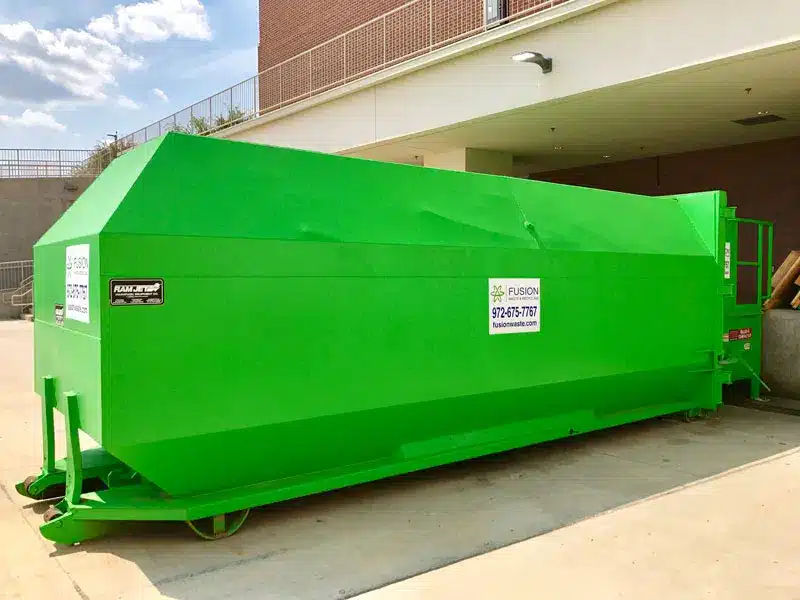
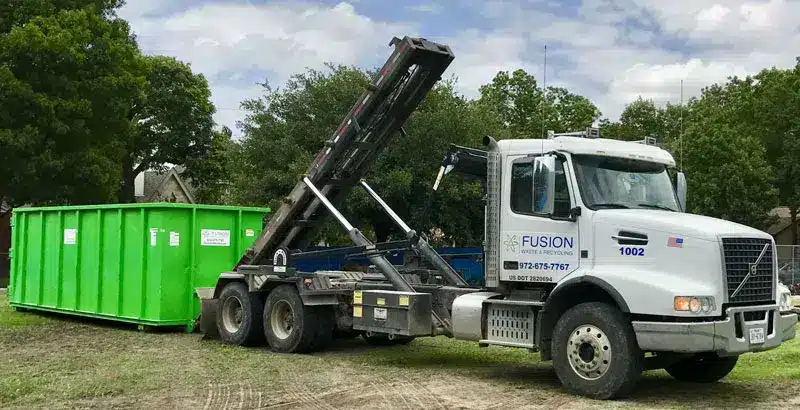
Container needs shift with unit count, occupancy, and how much organics or recycling volume a property is diverting. A property that recently added an organics stream, for example, may need to rebalance capacity across its front-load dumpsters rather than simply adding another trash container. Fusion Waste works through this sizing exercise directly with each DFW community, matching front-load dumpster sizes (2, 3, 4, 6, and 8-yard) and roll-off containers in the 20, 30, and 40-yard range for larger projects or move-out cleanouts to the actual volume a property produces instead of a generic default plan.
Placement and Accessibility
Recycling should be exactly as easy to reach as trash. If the trash dumpster sits steps from every building entrance while the recycling container is tucked behind a fence on the far end of the property, participation drops no matter how good the signage is. That’s why placing recycling alongside trash at every collection point, including shared spaces like mail rooms and laundry facilities, is so important. It helps ensure consistent waste diversion and balanced waste-stream volumes, preventing the operational bottlenecks caused by overflowing trash and rejected bins.
Fix Contamination With Signage and Consistency
Even a perfectly sized container setup will underperform if residents cannot tell at a glance what belongs where. Signage is one of the least expensive fixes available to a property manager, and it consistently shows up as one of the highest-impact ones.
Signage Standards That Actually Work
The most effective signage uses large, durable materials, consistent color coding across every container on the property, and simple pictograms instead of dense text. A sign that says "recyclables" without showing what that means invites guesswork, and guesswork is exactly what drives contamination. Clear, direct language, such as labeling a dumpster "Our Community Recycles Here," tends to perform better than technical or bureaucratic wording.
Breaking the "Trash Begets Trash" Cycle
Contaminated containers attract more contamination. Once a recycling dumpster has a few bags of household trash sitting in it, residents are far more likely to assume that is acceptable and add their own. Regular servicing, prompt removal of contaminants when staff spots them, and periodic reinforcement of signage all help break that cycle before it compounds. And it is exactly this kind of ongoing, hands-on support that separates a personalized recycling program from a rigid, standard service that gets installed once and left alone.
Expand Beyond the Basics With Organics, E-Waste, and Shredding
Cardboard, plastic, and glass get most of the attention in a typical recycling conversation, but they are far from the only diversion opportunity sitting in a multi-family community's waste stream. Consider adding these often-overlooked materials mentioned below to your building's recycling program.
Food Waste and Organics Diversion
Organics and food scraps have historically been left out of composting programs that were designed with single-family homes in mind, even though multi-family properties generate this material at real scale across dozens or hundreds of units. By expanding your waste stream to include organics for multi-family properties, you can close one of the largest remaining gaps in a community's overall diversion rate, and it is a natural next step once basic recycling infrastructure is in place.
Specialty and Commodity Recycling
Beyond organics, most multi-family communities generate a steady stream of electronic waste, scrap metal, wood, yard waste, and Styrofoam that never gets captured by a standard trash-and-recycling contract. This gap often extends to the property management itself, which frequently overlooks its need for confidential business document shredding. By building these specialty streams into a program, rather than treating them as one-off requests, property owners can elevate their operations from a bare-minimum service to a comprehensive strategy that benefits both residents and their own management systems.
Get Residents and Staff Engaged
Infrastructure and signage set the stage, but sustained diversion depends on residents and property staff actually participating, month after month, well past the initial launch of a new program.
Educating New Residents From Day One
Move-in day is the single best opportunity to set expectations. Include a short recycling and waste guide in the welcome packet, reinforce it with lease language, and point out container locations during the move-in walkthrough to help new residents start with the right habits instead of having to unlearn bad ones later. Incorporate ongoing reminders through newsletters, posters, and resident meetings as well to keep that initial education from fading over time.
Keeping Staff and Vendors Aligned
Property staff and maintenance teams need the same clarity residents do. If leasing staff cannot answer a basic question about what goes where, residents will not trust the signage either. That is why it is important to train staff alongside residents and keep haulers and vendors looped in on any program changes; it keeps the entire system consistent instead of relying on one department to carry the whole effort.
Track Progress and Set Diversion Goals
Waste diversion improves when it is actively measured, not just attempted. To gauge success, properties should focus on two critical metrics: the overall diversion rate (the weight of recycling and organics measured against total waste), and the rate of contamination events (such as rejected loads or hauler surcharges). Buildings that pursue structured certification programs with waste diversion requirements, such as LEED Operations and Maintenance, have shown meaningfully higher average diversion rates than comparable uncertified buildings, which is a useful benchmark even for properties that are not pursuing certification themselves. Setting a realistic diversion goal and revisiting it after each waste audit keeps a program moving forward instead of plateauing after the initial rollout.
How Fusion Waste & Recycling Builds Custom Multi-Family Programs
As an independent, MBE-certified waste and recycling partner based in the Dallas-Fort Worth Metroplex, Fusion Waste & Recycling was built around the idea that multi-family communities deserve better than a standard, rigid service plan. With more than 35 years of combined industry experience across the team, Fusion Waste works as a New Age Thinker in environmental services, focused on maximizing landfill diversion for every property it serves.
Step-by-Step Program Design
Every Fusion Waste program starts with the specific community, not a template. That means reviewing current container sizes and placement, identifying which additional streams (organics, e-waste, confidential shredding, or other special recycling) make sense for the property, and building a collection schedule around actual resident and unit density rather than a generic default.
Ongoing Education and Reporting
A program is only as strong as the support behind it. Fusion Waste assists communities with signage, resident and staff training, and implementation support so that a new diversion program actually sticks past its first month. That collaborative, step-by-step approach is what allows DFW multi-family communities to move from a standard trash-and-recycling contract to a genuine landfill diversion strategy.
Contact Fusion Waste Today for Multi-Family Property Waste Diversion
If your property's waste management isn't running smoothly—whether due to poor signage, lack of coordination, or inadequate bin sizes—our team is here to help. Book a consultation today, and we will design a solution tailored specifically to your facility's needs. With decades of experience in comprehensive waste disposal, we don't just hand you a generic blueprint. We guide you through every available option so you know exactly what to expect from your plan, completely eliminating the guesswork.
Frequently Asked Questions (FAQs)
National data puts multi-family recycling access at around 37 percent, compared with roughly 85 percent for single-family homes, even though overall U.S. recycling access sits closer to 73 percent. That gap is largely structural, tied to how multi-family properties are classified and serviced, rather than a reflection of resident interest in recycling.
Semi-annual or annual waste audits are a common recommendation from national apartment industry groups. Running an audit at that cadence gives property managers enough data to see whether recent changes, such as new signage or added container capacity, are actually improving diversion.
The right size depends on unit count, occupancy, and how many separate streams the property is diverting. Front-load dumpsters in the 2, 3, 4, 6, and 8-yard range typically cover day-to-day recycling and trash needs, while 20, 30, and 40-yard roll-off containers handle larger volume needs such as move-out cleanouts or bulk organics pickups.
Yes, and it is one of the more underused diversion opportunities available to multi-family communities. Organics programs have traditionally focused on single-family homes, which means many apartment and condominium communities have not yet added a food waste stream even though the volume potential across dozens or hundreds of units is significant.
It can. Confidential business document shredding, typically used by the property management office rather than individual residents, is a specialty recycling stream that keeps paper out of the landfill while also meeting a property’s data security needs.
References
- National Academies of Sciences, Engineering, and Medicine. “Municipal Solid Waste Recycling in the United States: Analysis of Current and Alternative Approaches.” National Academies of Sciences, Engineering, and Medicine, 2025. September 24, 2026. https://www.nationalacademies.org/read/27978/chapter/4.
- U.S. Environmental Protection Agency. “Best Practices: Equal Services for Multi-Family Customers.” U.S. Environmental Protection Agency, March 12, 2026. September 24, 2026. https://www.epa.gov/transforming-waste-tool/multi-family-customers.
- National Apartment Association. “Recycling Programs Best Practice.” National Apartment Association. September 24, 2026. https://naahq.org/recycling-programs-best-practice.
- Hamilton, S. “Engaging Tenants in Food Scraps Diversion Programs for Multifamily Housing.” New York State Pollution Prevention Institute. September 24, 2026. https://www.rit.edu/affiliate/nysp2i/blog/engaging-tenants-food-scraps-diversion-programs-multifamily-housing.
- University of Louisville, Center for Environmental Policy and Management. “Establishing Successful Recycling Programs in Multi-family Dwellings.” University of Louisville, 2026. September 24, 2026. https://centers.louisville.edu/environmental/center-environmental-policy-and-management.
- U.S. Environmental Protection Agency. “Managing and Reducing Wastes: A Guide for Commercial Buildings.” U.S. Environmental Protection Agency, July 31, 2026. September 24, 2026. https://www.epa.gov/smm/managing-and-reducing-wastes-guide-commercial-buildings.
- MacLaren, V. et al. “Meeting Urban GHG Reduction Goals With Waste Diversion: Multi-Residential Buildings.” Buildings & Cities Journal. September 24, 2026. https://journal-buildingscities.org/articles/10.5334/bc.277.