Key Takeaways
- A dumpster on site gives your team capacity over days or weeks.
- Junk removal takes care of the lifting and the hauling in a fast, scheduled visit.
- The better fit depends on project scope, site access, staffing, budget, and your landfill diversion targets.
- Dumpster rental pricing typically includes delivery, pickup, and disposal up to a stated weight limit.
- Junk removal pricing takes into account crew time, item types, site access, and how much truck space is required.
- Landfill diversion improves when materials are separated at the source and sent to verified recycling outlets.
- Permits or traffic-control requirements may apply in some Dallas-Fort Worth (DFW) municipalities if a container sits in a public right-of-way, such as a street, a sidewalk, or an alley.
- Fusion Waste & Recycling builds personalized, step-by-step programs using front-load dumpsters and roll-off dumpsters to help maximize landfill diversion across North Texas.
What Is Dumpster Rental?
Before renting a dumpster, it’s helpful to take a look at what’s involved in this service.
How Dumpster Rental Works
Dumpster rental gives your organization an on-site container for a set period. You load materials as work progresses, and the hauler returns for pickup when you’re done or swaps the container when it’s full. This way, you get schedule control, steady capacity, and a single location for debris, recyclables, and bulky items throughout your project or routine operations.
- Choose the right dumpster type and size for your project or ongoing service needs.
- Verify placement space, truck access, fill-level rules, accepted materials, and included weight limits.
- Set your delivery date and rental duration or service frequency.
- Load materials into the dumpster, keeping both volume and weight in mind.
- Request a pickup, a dumpster swap, or scheduled service.
For DFW businesses, school districts, and multi-family communities, dumpster rental means reliable operations. You can prepare the waste materials responsibly, add recycling streams, improve landfill diversion, and keep service areas organized for crews without rushing everything into a single load-out window.
Types of Dumpster Rentals
Commercial waste programs usually deal with two container categories, each built for different needs. Either can support recycling when paired with clear labels, proper training, and a defined diversion plan.
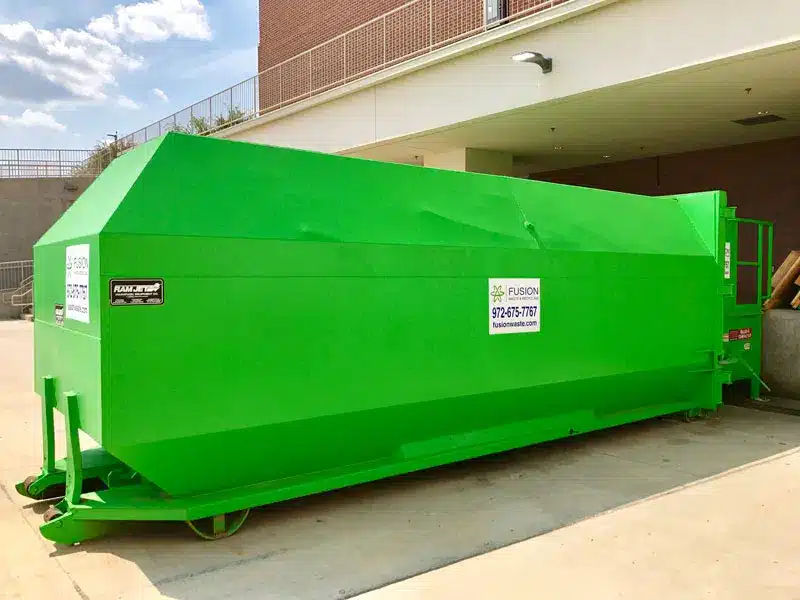
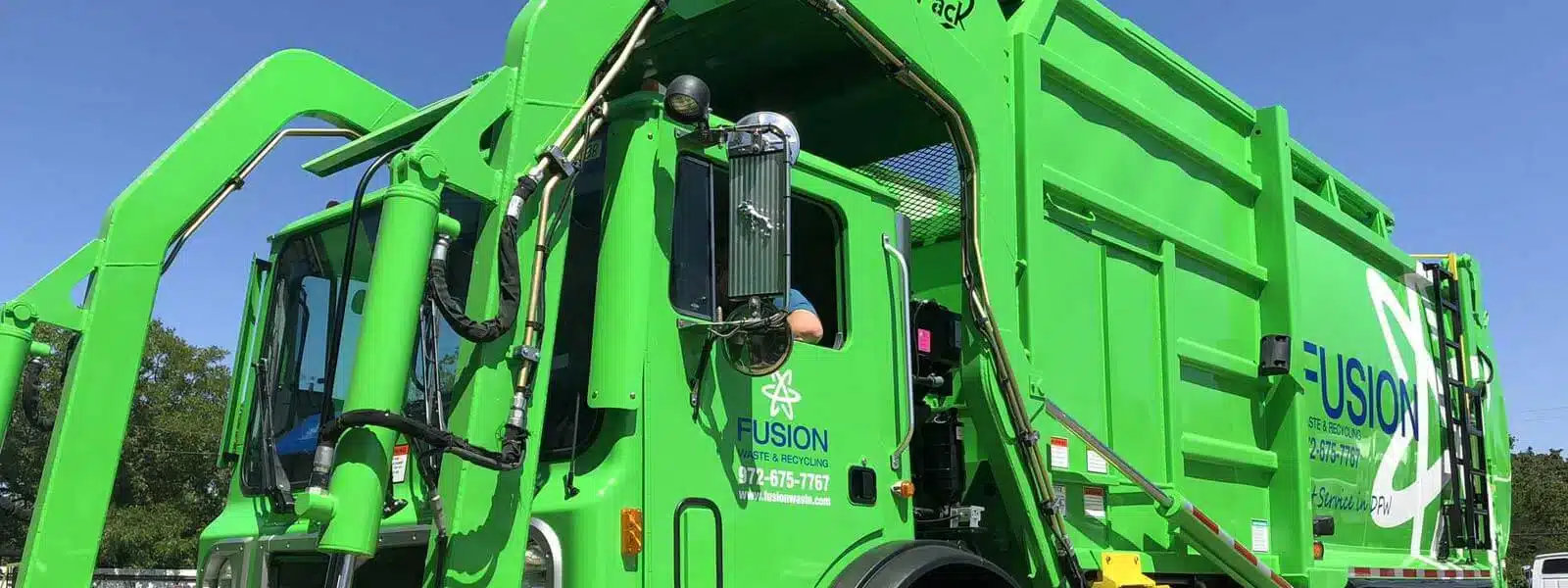
- Front-load dumpsters: Best for ongoing service at retail locations, offices, school campuses, and multi-family properties. These containers fit smaller areas and can be serviced on a schedule that matches your volume.
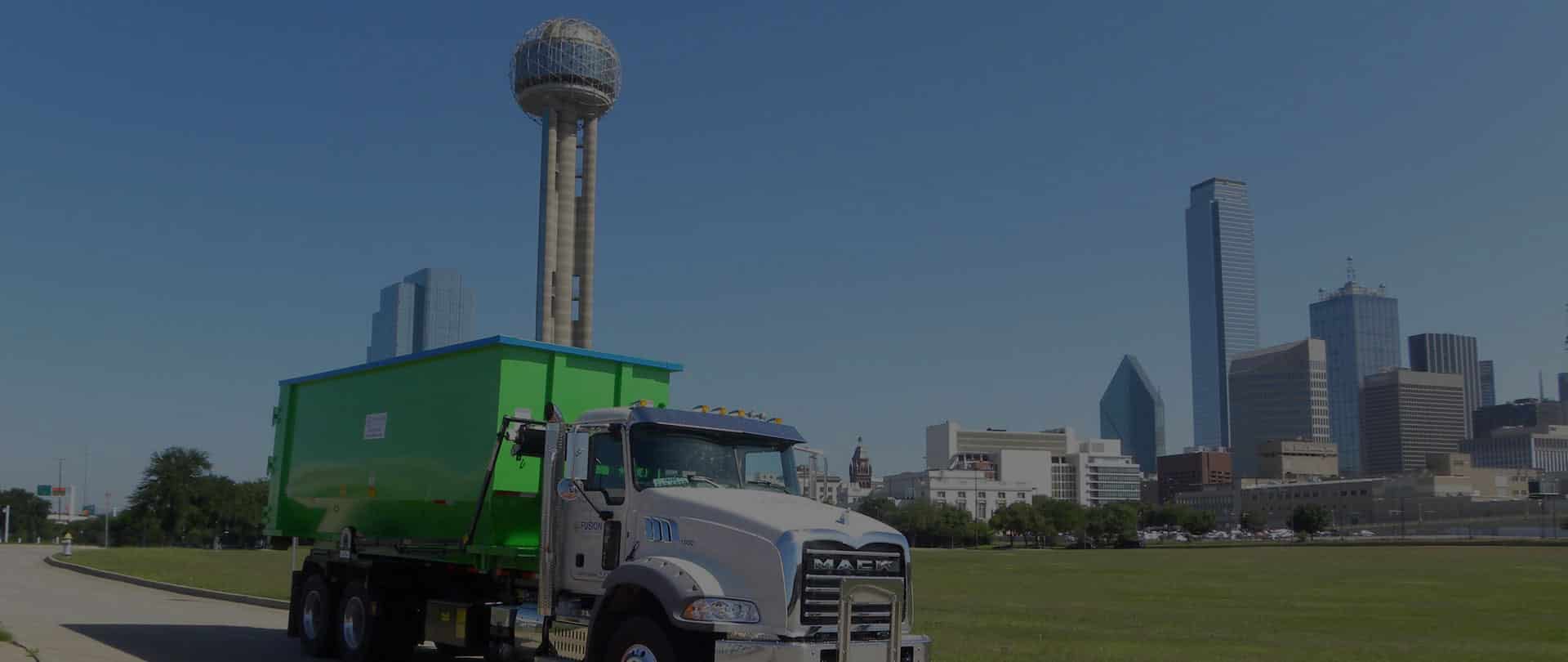
- Roll-off dumpsters: Open-top containers designed for construction cleanup, renovations, large facility cleanouts, roofing work, and bulky debris. They’re delivered for a set rental period and removed or swapped when full or at project milestones.
Common Use Cases
- Construction and renovation debris with different daily volumes and multiple trades on site
- Ongoing commercial waste and recycling collection at offices, retail centers, school districts, and multi-family properties
- Seasonal or major projects: furniture turnover, tenant improvements, end-of-year records purges, or campus maintenance
- Special initiatives, such as pilot programs for recycling cardboard, composting organics, and safely disposing of electronics
Pros and Cons of Dumpster Rental
Pros
- On-site capacity matched to your work
- Predictable costs over a set rental period
- Supports source separation and North Texas diversion goals
- Flexible pacing for multi-day or multi-week projects
- Centralized, safer waste storage that reduces double-handling across your site
Cons
- Requires dedicated space and truck access
- May need a permit if placed in the public right-of-way
- Your team is responsible for the loading labor
- Overweight or overfill charges apply if limits are exceeded
- Accepted-materials rules must be followed strictly to avoid contamination fees
What Is Junk Removal?
Junk removal is an easy, fast option that gets rid of waste from your site without requiring your organization’s labor resources.
How Junk Removal Works
Junk removal is a full-service option. A crew arrives during a scheduled window, loads your items, and takes them away in one or more trips. It’s designed for quick cleanouts, light-to-moderate volumes, or bulky items that are difficult for staff to move. You get speed and convenience by outsourcing the lifting and the transportation.
- Specify your materials—types, approximate volume, access conditions (stairs, elevators), and preferred timing.
- Request a quote based on item types, crew time, and truck space; confirm surcharges for dense or hard-to-handle materials.
- Schedule the pickup window and put items in one area if needed to streamline loading.
- The crew loads and hauls during the appointment; additional trips may be needed for higher volumes.
- Ask about DFW recycling or donation options for items that can be recovered.
Types of Junk Removal Services
- Single-item or bulk-item hauling for office furniture, fixtures, and equipment
- Light construction debris pickup for small renovation cleanups or tight timelines
- Property turnover cleanouts for multi-family properties and commercial suites
- Specialty pickups such as e-waste or pallet stacks
Common Use Cases
- One-day cleanouts where space is limited or on-site containers aren’t feasible
- Removal of a limited volume of bulky items without involving internal labor
- Clearing remaining debris when a construction phase ends and a fast reset is needed
- Decommissioning offices or classrooms with manageable quantities set aside for removal
Pros and Cons of Junk Removal
Pros
- Fast, labor-included solution
- Minimal disruption
- No on-site container required
- Practical when access or space is tight
- Efficient for bulky items that must be removed on a specific day
Cons
- Pricing can rise with extra trips, access challenges, or heavier materials
- Offers less timeline flexibility
- Limited on-site capacity for projects generating debris over several days
- More difficult to implement source-separated recycling without a plan
Dumpster Rental vs. Junk Removal: Key Differences
Whether you’re doing an office clearout or managing a multi-family residence, keeping the following core differences between the two services will help you make the right decision for your operational needs.
Cost Comparison
Dumpster rental quotes normally bundle delivery, pickup, and disposal up to an included weight limit. Final cost depends on dumpster size, rental duration, material type, location, and whether you exceed the included tonnage. Junk removal pricing usually includes crew time and the truck space your items occupy, with potential add-ons for dense materials, extra labor, or multiple trips. For multi-day work or ongoing operations, a roll-off often provides better cost control, Smaller, well-defined jobs can be suitable for junk removal because the labor is already included.
Convenience
If you need more precise timing and the ability to load as work progresses, dumpster rental is more convenient. If you prefer to minimize internal labor and to finish everything in one visit, junk removal is simpler. Many DFW organizations use both: roll-off service during active work, followed by a junk removal appointment for the final sweep of remaining bulky items.
Speed
Junk removal is typically the fastest single-touch option. A trained crew can clear an area in one visit, especially for lighter volumes. Dumpster rental is efficient across days or weeks, and it eliminates repeated off-site trips. It also centralizes debris collection as it’s generated.
Volume of Waste
For larger volumes, roll-off dumpsters in 20, 30, or 40-yard sizes support construction cleanup, facility refreshes, and ongoing debris disposal without relying on back-to-back truck runs. Junk removal fits lighter to moderate loads or defined item sets, such as office furniture, a limited number of fixtures, or a small pile of renovation scrap.
Labor Required
With dumpster rental, your team or subcontractors must handle the loading, which can work well if labor is already on site. Junk removal includes the crew and lifting, which helps when staffing is tight, or items are awkward to move. Consider both direct labor and indirect costs (training, supervision, and lost productivity) when evaluating the total impact.
Environmental Footprint
Neither option is inherently greener. Landfill diversion depends on your material stream, how well recoverable commodities are separated, and the provider’s recycling outlets. Construction and demolition materials such as concrete, metals, wood, and gypsum can be diverted through reduction, salvaging, and recycling when planned at the outset.
Dumpster rental often makes source separation easier by using dedicated containers and proper signage, as well as by implementing appropriate training. Junk removal can also support diversion when items are sorted for recycling or reuse before pickup. The outcome improves when you prepare ahead of time and partner with a provider that prioritizes recycling and transparent end markets.
Cost Breakdown: Dumpster Rental vs. Junk Removal
An important aspect of choosing any waste removal service is cost, which depends on several factors we’ll explore below.
Average Dumpster Rental Costs
Pricing for dumpster rental varies across North Texas and depends on what you’re discarding, for how long you need the container, and where it will be placed. A standard quote usually includes delivery, pickup, and disposal up to an included weight limit for the selected size. If you go beyond that limit, overage charges apply. Right-of-way placement can involve permit requirements and fees.
Make sure to follow these steps to calculate the expected costs.
- Assess the materials: Types and volumes
- Choose an appropriate container size: Front-load 2, 3, 4, 6, or 8-yard for ongoing service; roll-off 20, 30, or 40-yard for projects
- Discuss timing with the provider: They can align their tonnage and schedule with your operations
Average Junk Removal Costs
Junk removal quotes normally reflect the truck space the waste occupies and the time and the effort to remove it. Prices can increase for dense materials, challenging access (multiple floors or long carries), or additional trips if one load isn’t enough.
Because crew labor is bundled, junk removal can be efficient when you have a defined set of items and a tight deadline. Ask for clear inclusions, any potential surcharges, and how recyclables and donations will be handled.
Hidden Fees to Watch Out For
- Overweight charges on dumpster rentals if your load exceeds the included tonnage
- Overfill fees if material sits above the container’s fill line
- Trip charges or dry-run fees if a container can’t be delivered or picked up due to blocked access
- Additional-day rental charges if you keep a roll-off longer than planned
- Surcharges for dense or special materials that require different handling or facilities
- Extra-labor or stair-carry fees for hard-to-access items
- Multiple-trip charges when volume exceeds a single truckload
- Permit or right-of-way fees if placement occupies a street, a sidewalk, or an alley in some municipalities
When to Choose Dumpster Rental
Choose dumpster rental when your project or property benefits from on-site capacity, consistent disposal pacing, and a structured recycling program. Front-load dumpsters keep commercial service dependable at offices, schools, and multi-family communities, while roll-off dumpsters support flexible timelines for projects and construction work. Below are the main use cases for renting a dumpster.
- You’re managing construction cleanup or a phased renovation that generates debris over days or weeks.
- You want to increase landfill diversion with dedicated containers for materials like cardboard, metals, or wood.
- Your staff or subcontractors can load materials as part of their regular workflow.
- You need predictable capacity and scheduled pickups at a campus, a shopping center, or a multi-family residence.
- You have suitable placement space and truck access and want to minimize off-site trips.
When to Choose Junk Removal
Opt for junk removal when speed and labor are top priorities or when volume is limited and well defined. It’s especially helpful for bulky items, light cleanouts, and turnovers that should be wrapped up in a single appointment. The following are the primary types of situations where this service is best.
- You’re decommissioning offices or classrooms and want the provider to handle the lifting.
- Space is tight, and an on-site container isn’t practical.
- You have a targeted set of items that must be removed quickly: workstations, fixtures, or a small pile of construction scrap.
- You’re coordinating post-project cleanup and prefer to hand this final step to a trained crew.
Common Mistakes to Avoid When Choosing a Service
- Underestimating volume or density: Dense materials can hit weight limits before the container looks full.
- Skipping site-readiness: Confirm placement space, truck clearance, and a clear path so delivery and pickup go smoothly.
- Overlooking accepted-materials policies: Clarify what can and can’t go in the container to avoid contamination and extra fees.
- Forgetting right-of-way rules: Placing a container in a street, an alley, or a sidewalk may require permits—check with your municipality before delivery.
- Neglecting landfill diversion: Plan for source separation, ask where recyclables go, and confirm end markets for recycling.
- Leaving containers unattended without a plan: Communicate with internal or external teams and consider supervision to reduce unauthorized dumping.
- Choosing based on price alone: A low quote without details on included weight, rental duration, or service schedule can end up costing more later.
- Not aligning services to staffing reality: If you’re short on labor, junk removal may be more economical than pulling workers from other tasks.
Contact Fusion Waste & Recycling for All Your Waste Removal Needs
Fusion Waste & Recycling is DFW’s New Age Thinker in environmental services. As an independent, MBE-certified partner with over 35 years of combined experience, we design personalized, step-by-step waste and recycling programs that help your organization maximize landfill diversion without disrupting daily operations.
We provide the right containers for the job: front-load dumpsters in 2, 3, 4, 6, and 8-yard sizes for ongoing commercial service, and roll-off dumpsters in 20, 30, and 40-yard sizes for projects and construction cleanup. Our team can integrate recycling for cardboard, plastics, glass, metals, wood, organics, e-waste, and confidential document shredding, along with training and signage to help your program succeed.
Whether you’re thinking about dumpster rental or junk removal for a school renovation, a multi-family turnover, or a regional construction project, our local experts will walk you through site access, sizing, weight limits, right-of-way considerations, and recycling pathways so you can make a confident, cost-effective decision.
Ready to get started? Contact Fusion Waste & Recycling to request a tailored quote and a detailed plan that meets your timeline, budget, and sustainability goals.
Frequently Asked Questions (FAQs)
Whether a permit is required depends on placement, your municipality’s rules, and the property. A container in a public right-of-way, such as a sidewalk, can be subject to permit or traffic-control requirements in parts of the DFW metroplex. Requirements vary by city and project, so confirm current guidelines with your local authority before delivery. Fusion Waste & Recycling can help you navigate the process.
Policies vary by provider and the material stream. Mixing multiple materials in one dumpster is often allowed for general debris, but separating materials into dedicated containers (for example, one for cardboard and one for mixed debris) improves landfill diversion and may reduce disposal costs. To avoid contamination fees and to make recycling easier, we’ll help you select the right container mix, labels, and staff training.
Yes, when your priorities are speed and labor savings, especially for light-to-moderate volumes or bulky items. Because the provider’s crew time is included in the price, junk removal can be cost-effective if you would rather not assign your staff to loading. For larger or longer projects, a roll-off dumpster is often better for your budget and recycling opportunities. Many DFW organizations use both approaches at different phases to balance cost, speed, and diversion.
Junk removal is typically a single appointment with same-day or next-day scheduling, depending on availability. Crews can clear waste areas quickly and leave as soon as loading is complete. Dumpster rental provides speed over a project’s duration: the container is right on your property as work goes on, eliminating repeated off-site trips and letting teams load on their schedule.
For renovations and construction cleanup, a roll-off dumpster (20, 30, or 40-yard) paired with a diversion plan is often the most efficient approach. Start by estimating material types and volumes, then select the right container size and rental duration. Set up clear signage and dedicated containers for recyclables such as metals, clean wood, and cardboard. Train crews on accepted materials, fill levels, and staging. Fusion Waste & Recycling will coordinate delivery, pickups, and recycling outlets so your project stays on schedule and on budget.
It depends on volume, material mix, labor availability, access, and timeline. Dumpster rental tends to be more economical for multi-day projects and larger volumes because you control the pace and avoid multiple crew appointments. Junk removal can be cost-effective for smaller, defined loads, especially when you value bundled labor and a quick turnaround. The best way to decide is to compare quotes that directly state size, included weight and crew time, rental duration, and any potential surcharges, and then factor in your labor availability and sustainability goals.
References
- The City of Dallas Department of Public Works. “Right-of-Way Management.” The City of Dallas Department of Public Works. May 14, 2026. https://dallascityhall.com/departments/public-works/Pages/right-of-way-management.aspx.
- United States Environmental Protection Agency. “Sustainable Management of Construction and Demolition Materials.” United States Environmental Protection Agency, March 18, 2026. May 14, 2026. https://www.epa.gov/smm/sustainable-management-construction-and-demolition-materials.